
PBHSOB ASSOCIATION NEWSLETTER
Dear Old Boy
BOB FAIR, A CHARMING AND MUCH LOVED PERSONALITY
Robert (Bob) Fair was a much loved member of the School Staff for 40 years and retired in 1972. Often cited as PBHS’s ‘Mr Chips’, he was an institution in his own right, developed a rapport with generations of pupils, and taught the sons and grandsons of many of his earlier pupils.
He was particularly renowned for remembering first names.
Bob attended Sunnyside School and in 1919 as an 11-year old, entered what was then ‘the school on the hill, across Walker Spruit’. He matriculated there in 1924, studied abroad at the University of Edinburgh, and returned to South Africa to commence a teaching career.
Little known is that this started at Krugersdorp High School, followed by a stint at Jeppe High School for Boys. Those were dramatic years that included the 1929 Share Market crash, the Great Depression and the unfolding of World War II.
Jeppe’s headmaster at the time, Mathewman D Manduell and his staff had to deal with many harsh socio-economic challenges, according to the school’s official history, Jeppe Schools & Quondam 1890 to 2015. These included the enrollment of the sons of many Jewish immigrants who had fled the aftermath of the Bolshevik Revolution in Russia; others in fear of Hitler’s rise in Germany.
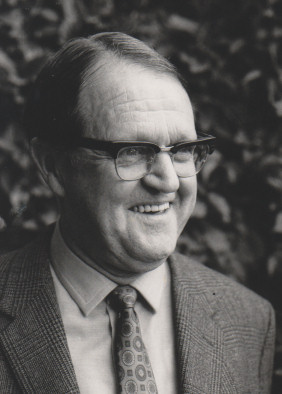
Bob returned to his old school in 1937 as a regular member of the teaching staff, was appointed Vice-Principal in 1953, and Co-Deputy Headmaster in 1968.
A kind and gentle man, he enjoyed chatting, and, as one Old Boy put it, you could understand what he said. “In fact, he exhibited a very broad range of interests, and was the kind of person you could go to for advice in spite of his never appearing to know all the answers”.
Bob was remembered by many as a stimulating and inspirational teacher of English who had few peers. And also an extraordinary housemaster, he was variously Senior Housemaster at Solomon and Rissik Houses.
Leon Kok caught up with Tom Fair in Cape Town to reflect on his father. Now aged 76, Tom also qualified as a teacher and taught at Bishops Diocesan College in Rondebosch for 40 years. It too has a long history, a strong academic ethos combined with a commitment to all-roundedness, and a proud record of achievements.
Excerpts:
When and where was your Dad born?
On May 9 1907 at the Mowbray Maternity Home in Cape Town. He was the sixth born of eight children.
The background to his family?
His father was chief accountant of the Post Office in Cape Town, an important organization in those days. His mother was a devoted housewife.
What were your Dad’s majors at the University of Edinburgh?
Latin, English and Philosophy. Incidentally, he was hell-bent on his sons doing Latin as well.
Following his studies?
I think he knew my mother (Mary Helena Kate Davis) before he left for England and was keen to get back as soon as possible.
I’m not sure of the sequence of events, but I do know that my father taught at Krugersdorp High School (my eldest brother Alan was born there), followed by Jeppe.
Krugersdorp High was a co-ed school. Among his colleagues was ‘Snook’ Nobel Nobel, who became a great friend and was eventually Headmaster of Sunnyside Primary School.
This was all recorded by mother in a Fair Family history.
What happened to it?
Dad always threatened to write the ‘Family History’, but was a great procrastinator. And when he died, Mom wrote the book and 12 leather-bound copies were produced. One was given to each of their boys and I suspect one might even have found its way to PBHS.
After Krugersdorp/Johannesburg?
My parents moved to Pretoria, primarily, I would imagine, aimed at being close to Mom’s parents. Dad got a job at Boys’ High and stayed there for 40 plus years. There was nothing in-between that I know of. He taught Latin and English.
Tell us about your Mother, Mary, who was also very well known?
Her father ran the well-established business, AW Davis Complete House Furnishers in Pretoria, and her family lived in Arcadia. She was an only child and a Pretoria Girls High product.
Your own family (Bob and Mary’s offspring)?
As you well know, there were four boys, all of whom attended and matriculated at Boys’ High. Arthur, the eldest, became an architect. Alan went on to become a veterinary surgeon and ran a very successful business in Bethlehem for 40 years. John always wanted to be a farmer, this never materialized, but he became an eminent authority on grasses and pastures in the agricultural world and was an expert in bio-farming. Then there was myself.
Tell us about yourself?
I had more or less made up my mind to be a teacher at age 14 and had the full backing of my parents. They didn’t stand in my way at all. It was largely predicated on my being good at science and maths and wanting to make a contribution in education. I graduated with a science degree at the University of Pretoria with Chemistry and Maths as my majors, and my filler subjects were biological. So I was well-trained to enter the field.
The best advice that Dad gave me when I graduated was to move to Cape Town. He said ‘I’m going to find enough money to send you to Cape Town to do your Teacher’s Diploma there and then see if you can find a job. Because if you stay here, you will always be Bob Fair’s son. You need to be your own person!’
I was very moved when Stuart Jones (now in his nineties) phoned me one day and said, “I am delighted and wish to congratulate you for having chosen the teaching of maths as a career, and that you’ve done so well. You were one of the first to be included in my ‘add maths’ class’.
Did your Dad ever talk about his role as a teacher during the Depression years? They impacted on many families at the time.
No, not that I can recall.
However, he often spoke about South Africa entering World War II in September 1939 and its impact on the School Staff.
For instance, the Headmaster, ‘Baldy’ Matheson had the following to say at Morning Tea: “I know that many of you want to join up, but I cannot afford to lose all my Staff. I’m prepared to allow a percentage to go, and that’s it.
“Tomorrow morning I will place a bowl on the tea table and you are each to take a piece of white paper folded out – and if you get a ‘yes’, you can go to War. If you get a ‘no’, you can’t”.
Dad said that the next day everyone assembled around the table quicker than usual, and there was enormous anxiety. It was a mixture of excitement and nervousness.
Dad drew a ‘no’. His two close friends Kevin Wynne and Tommy Thomas drew ‘yes’.
Mr Matheson, however, insisted that those who remained at home joined the ‘Home Guard’. Its obligation was to guard the Union Buildings, government offices and various strategic installations.
Tommy later approached my Dad, and said, “I know that Mary is pregnant, and if it’s a boy, would you consider naming him ‘Tom’ or ‘Thomas’. My Dad replied, “Of course, I will”. And that’s where I got my name ‘Thomas’.
Did Kevin Wynne and Tommy Thomas survive the war?
Indeed. Kevin was a superb history teacher and Tommy was a great maths teacher. Kevin, I think, was later appointed Headmaster of Highlands North School in Johannesburg. Tommy went on to retirement at the School. It was almost as if I had been ‘commissioned’ to take over from him.
You were born in Solomon House in 1941, weren’t you?
Yes, the first and probably the only person to have been born legitimately on the school property.
Your family lived at the Marais Street cul-de-sac, immediately behind PBHS. Any significance or anecdotes regarding that location?
Yes, it was initially my grandparents (Davis’) home and was inherited by my parents. It was designed by my Uncle Alan Fair (Bob’s younger brother) especially for our family and was known as ‘Hunta’s Hoek’. This happened around June 1946.
It was very convenient for all of us – we merely had to walk down the kopje, through the bush, to the School buildings.
Dad always walked home for lunch and on one occasion came across several boys sitting in the thicket, smoking. He walked up to them and said, ‘Great to see you -you enjoying the smoke? I’m on my way home but could do with a cigarette too”.
The boys made a concerted effort to put out and/or hide their cigarettes. Dad said, “You can’t do that”, and asked for a cigarette. He sat down, smoked it, and really took his time to extend their discomfort. They were highly embarrassed and uncomfortable. They didn’t dare take a puff. Dad then got up and left without further ado.
Years later, one of those boys broached him on the subject, and asked, “Why didn’t you punish us?” Dad replied, “You got your punishment, there and then, and were no doubt extremely worried about when it was to come. The fact that you’re raising it now, shows precisely the actual impact it had”.
This has been my experience too. It’s amazing the lasting influence you can have on boys. When I was at Bishops, Old Boys would often come up to me with a long story of concern or appreciation about something that I had long forgotten.
Your Dad was a legend. Enlighten us on your perceptions of his style of teaching.
He was an educationist, first and foremost. He had a wonderful rapport with the boys. He had a unique ability of remembering names. And he always had time for a chat, outside the corridors, of course.
He was actually a quiet man, but believed intensely in his own philosophy of life. Inherent in this was deeming all boys to be part of the family, so to say, and treating everyone the same.
I remember walking with him one day and there were two policemen ill-treating a newspaper vendor. Dad walked up to them and said, “Listen,you have no business behaving that way and you may not beat him. It’s not your right to do it”.
They aggressively threatened to arrest my Dad for interfering, and he invited them to do just that. He said, “That’s my son; he will walk home and report what has happened”. They calmed down and nothing further came of it. What that taught me was the importance of being a defender of the underdog.
Not only was he a model father to us, but he so often went out of his way to protect boys at the School. He had enormous empathy for the weaker, whether they were up against Staff or their own peers. Justice was important to him, and it didn’t need to be forceful or violent.
That’s certainly true. I don’t recall him ever dishing out cuts. And yet, whilst his style may have seemed torpid, he didn’t come across as weak.
Yes, he was very different to many of his peers. Dad’s approach was to treat boys as adults, and/or teach them to behave as adults. He generally considered a forceful approach as irrational.
Incidentally, that’s what made the School great, having a diversity of wonderful figures and not being over-structured.
The story of your father invigilating a matric exam?
My brother Alan reminded me of this account. Dad saw a guy fidgeting, walked up to him, and noted that he had a piece of paper in his hand. Dad said,”Please give me that piece of paper”, which the guy did. Dad walked away, crunched it up, and threw it into the dustbin. He clearly recognized that if the matter was taken further, the guy would have been ruined. It was like a death sentence.
That guy later told the story to Alan and said that he was extremely grateful and had taught him enormous amount about honesty. Clearly, it had become so deeply entrenched in him.
Who were your Dad’s pals on the School Staff?
He generally got on with everyone, however different. He was very inclusive and went out of his way to introduce himself to new members of staff, make them feel welcome, and offer his assistance wherever required. He would typically say, “If you have any problems, come to me”. He was a very caring man.
Did he ever discuss Staff matters at your dining room table?
No, never. He was very private that way. He had his home office and that’s where things stayed. He would typically get his work done there and write his ‘Personal Notebook’. That said, we as boys knew that we could go in there and talk to him about anything. He never overlooked the importance of being our father.
What sort of husband was he?
I have never been asked that and, frankly, given it too much thought. But yes, he idolized my mother and was a very devoted and dedicated husband.
Was he a religious man?
He was spiritual rather than religious. With hats on, Mom would take Ouma to church in Pretorius Street every Sunday.
Then Dad would say to us, “Boys, I’m walking to Fountains Valley Nature Resort this morning, and if you’d like to join me, you’re very welcome”. It was a long walk down through the Dell and invariably over Muckleneuk. The incentive for us was tea and cream scones at the Denneboom Kiosk.
We always walked with God, in a sense. Along the way, Dad would stop and point to the various grasses, plants, animal life and insects and explain these to us. He’d say, “This is fascinating. It’s important that you understand and appreciate it”. It had a major impact on us.
Incidentally, few people today probably know that the Resort, proclaimed by President Kruger in 1895, is the oldest nature resort on the African continent. The Apies River which runs through it was also Pretoria’s major source of water for many decades.
Your Dad’s politics?
Never active, but talked a lot about it. He was vigorously anti-apartheid and hated the Nats. He consistently argued that South Africa’s salvation was their removal. As with his teaching, he believed that everyone needed to be treated equally and given a fair chance.
What would his reaction have been to the Ossewa Brandwag setting the former PBHS Cricket Pavilion alight during World War II? It was burnt to the ground.
He would have been both angered and unforgiving. South Africa, significantly, was the only country among the Allies where the official Opposition was not only totally opposed to the country’s participation in the war, but did its utmost to impede the war effort. The OB in particular worked closely with Nazi agents and was of major concern to all right-thinking South Africans.
Your Dad never took sport. Any specific reason?
He was in charge of the School Library and Cadets. He had an enormous passion for the Library and I recall accompanying him to Van Schaiks on many a Saturday to look at books and buy a handful of them. This usually took about two hours.
Included usually were the London Illustrated and Punch. That was one of our home perks, being able to read them on the weekend before they were dispatched to the School on Monday morning. Dad loved them.
Of course, your Dad also had an extensive library in his classroom.
Indeed, and all those books were all loaned out on trust. If you took one out, it was never recorded. It was automatically expected that you’d return it.
What was his personal taste in books?
He loved reading philosophical books, and not fiction. He would draw on these extensively and then make notes in his ‘Personal Notebook’.
What’s happened to those Notebooks?
I think that they’re stacked in my roof. Colin Hall was the last person to go through them.
I really think that you need to re-assess them and perhaps donate them to the School Archive. Which brings us to the subject of ‘Personal Notebooks’, which every boy taught by your father came to know. Explain the notion.
From Dad’s perspective, they were part of his philosophy of life and provided an opportunity to connect with Mother Nature. They were effectively diaries in which one recorded memorable incidents, good or bad; expressed personal views on a range of subjects; and philosophized if and when appropriate.
It was about you and from you. It was a form of meditation, if you like – taking yourself aside, reflecting on yourself, making value judgements, looking to solutions, and getting value from all this. The boys were enabled and encouraged to get deeper into themselves.
The Notebooks, of course, were exclusively yours. Dad never took them in and marked them. They were considered as very strictly ‘personal’.
Where did your parents/family spend their vacations?
We were a large family and money was limited.
Every July we spent two weeks camping on my Uncle Ted’s beautiful farm on the Bechuana (Botswana) border, where the Marico River joined the Crocodile River and formed the Limpopo.
It was organized by Uncle Ted, Kevin Wynne and Dad. Everything had been set up by Uncle Ted when we arrived. Typically, we hiked along the rivers, through the bush, viewed the game, stalked Impala, though were never confronted by the cats.
In the evenings Kevin and Dad set up the fire, did the cooking, and sometimes Uncle Ted would come and tell us hunting stories. Kevin and Dad both smoked pipes, were on the same intellectual level, and generally enjoyed chatting about education and books.
As we got older, accompanied by Dad, we rode our bicycles from Pretoria to the farm and back. Each trip took two days.
On one occasion we spent a holiday at Onrus in the Cape, and I recall the brakes of Dad’s car having failed. We had to drive all the way to Cape Town to get them repaired. And what really stuck out was having to come down Sir Lowry’s pass (then a dust road) in second gear. The passengers included my mother and us boys.
Your folks moved into Rissik House during mid to late sixties. You accompanied them. Any particular memories?
I was a university student at that time. No, nothing specific sticks out. It was run on exactly the same lines as Solomon House and School House. Dad performed the usual duties of the Senior Housemaster and Mom engaged with the Matrons to make it as comfortable as possible for the boys.
Finally, tell us about your Mom and Dad joining you in Cape Town.
In 1976 my late wife, Jo, and I had bought a big Victorian House in Claremont and invited them to move in with us, which is what they did the following year.The house had a self-contained flat and we reconditioned it to suit their needs.
They were very happy there; Jo and Mom had a wonderful bondage; and Dad got on with his reading, writing and other activities until he passed away. Dad became extensively involved with Old Boys’ living in the Western Cape.
Mom was diagnosed with cancer in January 1996; expressed her determination to make it to her 90th birthday in April; triumphed; and died eight days later.
Concluding comments?
A very emotional discussion. In fact, it’s difficult expressing my parents’ true spirit, their faith, their wisdom, their wit, their despair and delight. I cannot thank the Old Boys’ Association enough for the interest it has shown.
OBITUARY BY FORMER HEADMASTER, MR MALCOLM ARMSTRONG
…he died early on Monday morning 20th August at his home in Cape Town and his wife Mary was at his side. His sudden passing touches not only all of us present, but thousands of Old Boys and parents who are not able to be with us today.
It is impossible for me to encapsulate adequately his very full 77 years. But there are certain essential qualities which made him remarkable and which endeared him to people.
To begin with, he was born with a most appropriate surname – for he was FAIR by name, and FAIR by nature. A boy writing in The Pretorian 15 years back (1957) said, “He is a gentleman – rich in wisdom”. We all agree that he was a gentle man. He was ever kind, sometimes frustratingly so. When Old Boys speak of him, they often preface their remarks with the phrase, “What I gained from Bob Fair”, or, “What Bob Fair taught me…”
They were not usually referring to the subject English, but rather attitude to people and perspective about life. Nevertheless, he was a remarkable teacher of English.
(Former Headmaster) Mr Abernethy once described his methods as startlingly unorthodox. I heard only yesterday of how he once conducted a week-long exercise in essay reading. On Monday the boys wrote a rough draft. On Tuesday they wrote a second draft. On Wednesday they revised the latest draft. On Thursday they polished this revision. On Friday, the final redrafted, polished essay was handed in.
And then Bob said to them, “You had a great deal of pleasure writing these essays, far more than I shall have reading them”, and then threw them into the wastepaper basket.
It was he who introduced the concept of the Writer’s Notebook which spread throughout the Transvaal. Boys wrote whatever they wished, whenever they wished. He was not particularly interested in how they wrote or what they wrote. He said the Notebook was a self-validating exercise.
On Tuesday a particularly articulate Old Boy told me that Bob Fair had cured him of stuttering. When I asked him how, he replied that Bob had made him a school courier and that he had to condense and then convey messages to every class around the School.
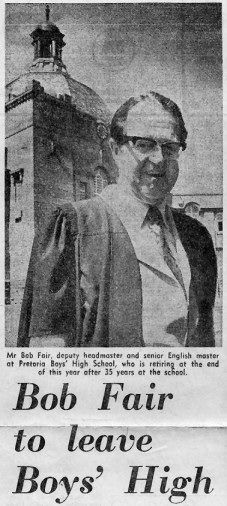
Bob was an avid reader and nearly every picture of him in The Pretorian shows him with a book in his hand. There can be no doubt that a love of reading amongst the boys derived essentially from him.
He was a man of many interests ranging from Boer War battles to grass varieties, particularly thosethat grew in the School grounds.
But his main interest in life was PEOPLE. He never hurried away from people. He always had time to talk, even to strangers. To them the opening gambit usually was, “You look as though you could have been at Pretoria Boys High School”. He was attracted to people because of his very warm human qualities, and it was those qualities that also made him a remarkable father.
A man of deep sincerity and genuine warmth, he was humble, decent, bore no grudges. On the staff he was known as a peacemaker. His warmth was epitomized by the inimitable relationships he established with boys.
On one occasion a boy by the name of Foot came limping into class with his leg in plaster. Halfway through the class Bob couldn’t resist the obvious pun and asked,”How’s your foot, Foot?” The immediate response from the boy was. “Fair, Fair”. No offence taken.
Incidentally, he never forgot the name orthe face of a boy he taught.
He found great joy in the simple things of life, especially nature like the shape or shade of a tree, the call of a bird, or even a beautiful sunny day.Perhaps this was the source of his serenity.
In 1972, the year of his retirement, he was the guest speaker at Valediction and his speech is recorded in The Pretorian. On his philosophy of life. His memories, he said, would be the “laughter, joy, good companionship and human decency”.
He posed the question, “What will happen of us when all our rags of glory have been ripped from us?” His answer, “The only thing that we have that is of real and enduring significance is our essential human selves. Each of us is at the core of his being a unique self. Our happiness and development lie in recognizing this and directing all our efforts to the realization and fulfillment of the true human force within us”.
Bob’s 77 years were like an unhurried, stately stroll through life, during which he liberally scattered the seeds of humanity of his way.
No man could have nurtured and sustained the sweet virtues that Bob did without considerable help. He was doubly blessed, for he had Mary, who with great love and patience and insight accompanied him on his journey.
In St Paul’s Cathedral, London, there is this epitaph to Christopher Wren, the architect:
“If you would see his monument, look around”.
If you would see Bob Fair’s, look around.
Robert Stocks Fair was a rare human being. We give thanks that he touched our lives.
NOTE FROM ALAN FAIR
Leon,
I really enjoyed browsing through your interview with Tom. There is so much else I could have added to it.
You mentioned Dad’s uncanny gift of remembering boys’ names. In fact, if he had ever met the parents, he remembered them too, including a sister in the family.
When I arrived in Bethlehem in 1966 I met Dave McGloughlin from the early 1940s. He immediately asked if I was related to Bob Fair. I told Dad about this and I remember how he put his fingers to his forehead (one of his distinctive habits) and asked, “Was he that tall gangling fellow interested in birds?”
Well, I never knew that, but Dave and I became good friends and I subsequently learned that at age 17 he had fibbed about his age, headed for the UK, joined the RAF, qualified as a pilot, and flew Spitfires during the Desert War. “Interesting Birds!”
Dad also told me about catching a boy smoking. Acting Head at the time, he told the boy to get to his office and said, “I’m going to give you six of the best”. He gave him one and ordered, “Come back on Thursday, and I’ll give you the other five”.
Next morning, the boy was waiting outside Dad’s office, and Dad asked, “What’s the problem?”
“Sir, I can’t wait until Thursday, I want the other five now”.
Said Dad, “Get out and don’t smoke again on my route where I can catch you!”
Typical Bob Fair psychology, emphasizing your point about him not being a caning teacher.
On one occasion at Rissik House, a boy came crying to Dad and asked him to phone his father to fetch him. When Dad asked why, the boy replied that he had enough of a boy who had been tormenting him – he regularly swept the younger boys books off the table in the Prep Room.
Dad said, “No, before I do that, next time I want you to jump up and punch his nose with your fist as hard as you can, and then run as fast as you can”.
“He’ll kill me”, the boy replied.
“No he won’t”, said Dad. “And if he torments you again, I promise I’ll phone your Dad”.
That put paid to the issue. Again, Bob the psychologist.
I loved my Dad and had a wonderful father-and-son relationship with him. It was one of the many blessings I’ve had in life!
Best regards,
Alan Fair.
NOTE FROM MARK HENNING, former Editor of Education Africa Forum and Independent Education; former Chairman of the Gauteng Cricket Board; former Vice-President for Africa of the Confederation of Independent Education; author of four books on education – latest The Cross, The Sword, and Mammon; former Headmaster of St Stithians College; and former National Director of Independent Schools’ Association:
Dear Leon,
Thank you for sharing with me the article on Bob Fair with the addenda by Tom and Alan. They capture just how warm, humane and inspirational a person he was. And, from what I know of Tom, he is very much a chip off the old block of precious timber.
As a young, impecunious teacher, I was appointed an examiner in English, first for the language paper, and then, because it paid more, for the essay.
In both, I worked with two exceptional Chief Examiners – Frank Robertson, who had taught at Hilton before becoming Principal of Germiston High School, and Bob Fair. Both wonderfully popular men, they could not have been more different in style and temperament.
Frank was absolutely meticulous in all he did. He marked scripts before he let sub-examiners loose on them; this to ensure that he understood the diversity of answers that a question legitimately elicited. He would then go over these scripts with his team, to try to ensure a common understanding and comparability in standards.
Bob was very concerned that the poor spelling and untidy writing would unduly influence the allocation of marks. He would give his team copies of work that were poor in these disciplines, select those with merit, and read them out in his beautifully modulated voice, and challenge the sub-examiners to reassess the work. Inevitably, they would focus on the content and language and award a much higher mark.
Shortly after those experiences, I was seconded from King Edward VII School (KES) to lecture at the Johannesburg College of Education, where for three years I shared an office with Malcolm Armstrong, another superb teacher of English. I suspect that Malcolm might not have received the credit he deserved for what he did at PBHS.
He and I comprised the final short list of two for the new post of Deputy-Head of KES, and I truly believe that school made the absolutely right decision in appointing him. As a prominent Old Ed said to me the other day, Malcolm changed the school from a 1940s school into a 1970s one.
On every social occasion I attended with him, he was a dominant personality, with his wide interests, Royal Academy Training, and love of life.
PBHS featured quite large in my life, with friendships with another great teacher of English, Terry Ashton; the sports staff of Burridge Spies, Larry Robertson and the Mulvennas’; and the artists Larry Scully, Clinton Harrop-Allen, Dan Swart and Louis van Heerden. At least two of these could be classified as serious intellectuals, in addition to their love for sport.
Add Jeppe and Potch, and I hope that the same affinity exists between the Milner Schools today, as they did then. Des Abernethy had taught at KES for years before being appointed an inspector of schools, an elite post he rated well below the Headship of PBHS.
The final name that rang bells for me was that of Colin Hall, who often told me that Bob Fair had told him that teaching should be his calling. Instead, Colin became a prominent businessman and a director of the former SA Breweries, but is now very successfully engaged in teaching life skills, with methods that would not be alien to Bob Fair’s philosophy.
Great memories.
Mark.
Text: Leon Kok | Photos: School Archive
OBSERVATIONS OBSERVED
Several times I have put a jumble of mathematical figures in my Personal Note Book. I put these down with a purpose. The purpose is to see if I can arouse the curiosity of Mr. Fair. But not once has he asked me the meaning of any of these formulae. This you might call an observation in an observation. Let me explain:
I have just observed that Mr. Fair failed to observe an observation made by me when I was observing his observation of my observation.
– Raynwer, Form 5A – The Pretorian 1957
CAPE TOWN BRANCH ANNUAL DINNER
The Cape Town branch held its Annual Dinner at the end of May, again at the Rondebosch Golf Club.
A total of 70 Old Boys were present, numbers cut from last year because of reunions in Pretoria for various groups in the preceding weeks and a surprisingly large number of apologies due to business and overseas travel.
The oldest Old Boys at the function both came from the class of 1953 – Judge Roger Cleaver and Bruce Sandilands – and the youngest from among the 2012 graduates – Matthew Hawken and Shane Horsley.
Trevor Quirk (1965) acted as MC with 1957 Head Boy, David Dalling, saying Grace and 1958 Head Boy, Tony Murray, proposing the Toast to Absent Friends and to the School.
Headmaster, Tony Reeler, again provided a comprehensive review of the last year’s activities at the school, a speech always greatly anticipated, and his thoughts on the future of education in the country and particularly the impressive quality of boys emerging from the school.
As is custom, speeches were kept short and bonhomie between Old Boys flowed, as did the liquid refreshments on a night of enjoyable reminisce of happy days at the school on the hill. The last stragglers had to, again, be shooed from the bar long after closing time!
– Mark Gleeson
PRETORIA BOYS HIGH SCHOOL NEWS
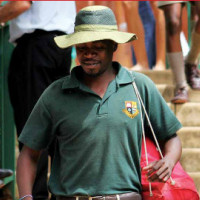
Read a great write up on Gauteng Schools Water Polo and Pretoria Boys High School coach, Luvuyo Rubushe on page 22-23 of the latest issue of Game On Magazine.
Click here to read the article.
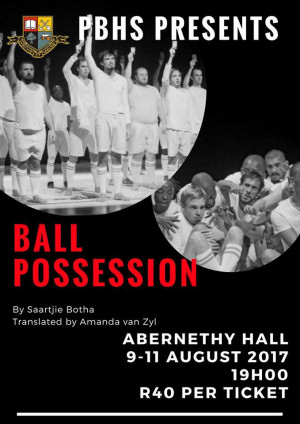
Pretoria Boys High School Fringe Production – Ball Possession
9 August 2017 – 11 August 2017
It is about rugby.
It is about father-son relationships.
It is about being a man.
It is about being white.
It is about being brown.
It is about being black.
It is about race relationships.
It is about blood.
It is about the language.
It is about South Africa.
What is even more astonishing is the fact that the playwright is a woman who dared to look into the inner world of the man.
Saartjie Botha based her play on the comments that people make on line about various issues.
Mostly anonymous or hidden behind pseudonyms. It is here where the true South African can climb on his soap box and discuss religion (rugby), gods, God, Afrikaans, skin colour and ball possession.
Do not miss this discussion. Some of it will make you smile but, some of it will also want you wipe away a tear.
Tickets are R40 per person. Click here to make a booking
OLD BOYS IN THE NEWS

Mathew Pillans: Surrey bowler extends Leicestershire loan deal
Leicestershire have extended Surrey fast bowler Mathew Pillans’ (2009) loan deal by a further month.

Sudbury man stars in Essex T20
Sudbury Cricket Club’s overseas star, Dustin Melton, (2013) put in a man-of-the-match performance as a Premier Leagues XI lost by 51 runs to Essex’s Twenty/20 Eagles side at the Cloudfm County Ground on Tuesday.

RADIO: Mark Fish On Pirates’ Problems, Money In Football & A Special Surprise
In this week’s episode of the Big Interview, we talk to South African football legend Mark Fish (1991).

John Smit hooked on TransCape
Former Springbok hooker John Smit (1996), accustomed to tough sporting challenges, faces an examination of another kind when he competes in the TransCape mountain bike race for the first time next year.

Can the Lions return the pain to the Canes?
… So what does the Lions’ defence coach JP Ferreira (2001) have to say about that? “I’d be interested to see the defensive stats of the Bulls and Cheetahs during last year’s competition, when they faced the Australian teams, as we did this year.”
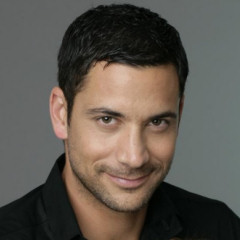
Tlale’s reality show puts interns to the test to see if they are cut out for fashion
The Intern is hosted by Nico Panagio (1991), who traverses the often difficult space between the interns and the designer, as he informs them of their strengths, but especially their weaknesses, in no uncertain terms.
DESKS
A desk can in many ways reflect the character or personality of its occupant. A survey of all desks in the school seems to show that the average PBHS pupil has a destructive streak in his character. A desk is a two-time loser; it helps the scholar through numerous tests by means of the complicated formulae and crib-notes written on its surface. When the tests are returned and the results are not what they should be, the pupil hacks away at the top of his desk with a compass or any other handy sharp object in order to release pent-up frustrations.
Despite severe measures to try to put a stop to this senseless persecution of desks, amateur carpenters abound at Boys High.
– R. Stroud 4E – The Pretorian 1977
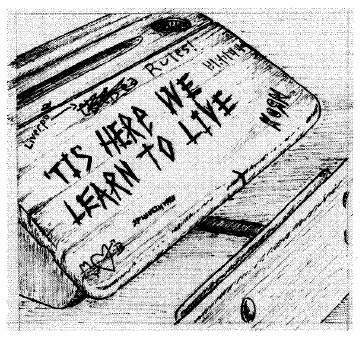
– The Boys Highlights Number 9 (November 2007)
SOLOMON HOUSE OLD BOYS

Solomon House is raising funds to upgrade its computer room.
Old Boys who were in Solomon House are being given the opportunity to “buy” a Solomon House Honours Hall Chair and so donate towards this worthy cause.
Please email Mario Maartens at mmaartens@boyshigh.com for more information.
IN MEMORIAM
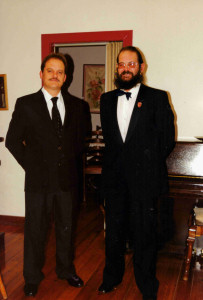
ROBERT CLIFFORD (OKI) TURNER (1968)
It is with great sadness that I write to inform you of Oki Turner’s passing on the 15th June 2017.
I believe he was a Solomon House boy, 1968.
Oki became another victim of a brutal farm attack in Haenertsburg, and died of his injuries later.
I have attached a photo of us, taken in 2001 on the occasion of the school’s 100th anniversary, Oki is on the right of frame.
He was a gentle, caring soul, and is remembered with much love.
Regards,
Andreas Jablonski