
PBHSOB ASSOCIATION NEWSLETTER
A MESSAGE FROM BILL SCHRODER
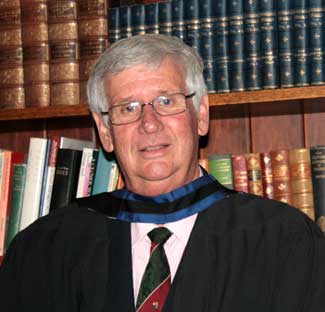
I would like to commend the two stories that follow to all Old Boys. Edwin Cameron (Deputy Head Prefect in 1970) and Peter Cruse (Head Prefect in 1968) have both had stellar careers and made a significant difference in the lives of thousands of South Africans which they believe would not have been possible were it not for generous opportunities given to them by PBHS in the 1960’s.
Their stories reflect what we are trying to do in the 2020’s with our “Developing Tomorrow’s Leaders, Today” campaign through which we hope to give similar opportunities to deserving boys who would ordinarily not be able to attend a world class school. I hope that these stories may result in many Old Boys supporting our campaign.
At the end of this publication is the most recent campaign letter and a pledge can be made via https://pretorian.co.za or by requesting a form from info@pbhsob.com.
Best wishes
Bill
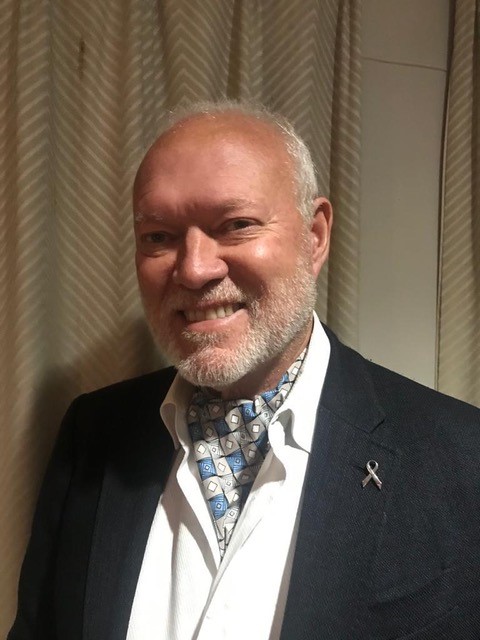
DR PETER CRUSE (MATRIC CLASS OF 1968)
How Abe’s generosity paved my personal journey to PBHS
– What a difference a bursary makes
By Dr Peter Cruse (Matric Class of ‘68)
Pretoria Boys’ High admitted me as a boarder in School House in January 1964. For long, how and why this happened was a mystery. But recently I discovered a 60 year-old piece of paper, which shed light on my journey to Boys High. It is a fascinating story!
My admission to PBHS changed my life. I got into the school even though my parents did not live in the official catchment area. They were divorced, estranged, often unemployed, often homeless (or of no fixed address). For them, the school fees, let alone the boarding fees, were unaffordable. Also – they’d not applied for me at Boy’s High. So how did I get in?
Desmond Abernethy (“Abe”)
My dear friend Edwin Cameron first suggested to me that Desmond Fitzgerald Abernethy,1 Headmaster 1956-1973, fondly known as “Abe”, may have been my secret benefactor. Edwin’s2 and my life stories have deep and intriguing parallels. We both came from institutions (an orphanage and a hostel) and overcame adversity to end up at Boy’s High. In Edwin’s words, ”The deepest parallel is the role the school played in transforming each of our lives and enabling us to set out on our paths of professional engagement”.
After Boys’ High, Edwin and I both won the Anglo-American Open Scholarship and were also elected South Africa-at-Large Rhodes Scholars. With my PhD and medical degrees and specialist qualifications, I returned to South Africa in 1995 in to take up senior academic positions at UCT and specialist positions at Groote Schuur Hospital. I also later did an MBA at the UCT Graduate School of Business, winning its Gold Medal. These achievements all spring from values I gained and lessons I learned during my formative years at PBHS.
An echo from the past
Some months ago, I found my final Brooklyn Primary school report. Signed “DFA”, it bore an inscription in Abe’s unmistakable handwriting. Fatefully for me, he inscribed: “Admitted as a boarder School House”.How Abe got my primary school report remains a mystery.
The link, I now realise, was that Abe was a Trustee of St Peter’s Hostel in Brooklyn, where from my tender years I was a full-time charity boarder3. In 1959, my younger sister, Sandy, and I had become homeless when our parents divorced. I was 8 and Sandy was 6. Our parents were dysfunctional because of alcohol-dependency, job loss and severe mental unwellness: Sandy and I were separated and placed into different hostels, on opposite sides of Pretoria5,
Some of the older boys at St Peter’s were 16 or 17 – large, muscular, hormonal and out of control. But the physical bullying also made me more muscular and stronger. Soon I learned to defend myself. I developed a sharp wit and a quick sense of humour. I was able to talk my way out of threats from bigger boys, and more importantly, able to protect the little ones, some as young as six.
My heavy-drinking father was sometimes in trouble for what we now call domestic violence and GBV. My mother had to have surgery more than once for her fractured jaw and face. My doctor’s training helps me to understand that like Edwin’s father2 my father had alcohol dependency complicating untreated PTSD from his time as a fighter-bomber pilot in WW2.
Then he largely disappeared from our lives. My mother, without even a Matric, struggled with low-paid jobs – but eventually became psychotic with depression, needing severe medical interventions and long periods in mental institutions.
So, there was no breadwinner, no homemaker, no income and no home life. Sandy and I, constantly moving, were often “on the run” from angry ex-husbands, creditors, sheriffs, bounty-hunters or debt-collectors. Pulled in and out of primary schools, we could not easily make friends or put down any roots or develop good study habits. Sundays, a “family day” out, were distressing – usually no one fetched us; the long school holidays were nightmares, for we had nowhere to stay.
Reading and studying – my escape from bullying
To escape from the tense, edgy hostel atmosphere and the daily bullying, I hid under the dormitory beds after school. Here I studied quietly or read. I took refuge “inside my head” via my school books. I also read other books from our small library (like The Hardy Boys, The Famous Five, Biggles, and The Great Escape). These opened the door for me to other worlds and other possibilities and they gave me hope of a better world outside.
Then came my silent rescuer.
Meeting Desmond Abernethy
I had met Abe several times at St Peters when I was aged 8-12 and thereafter. But as a Trustee, he was sometimes called in by the Matron, Ms. Mary Ford, to manage some emergency or incident in the middle of the night. Abe was twice accompanied by the police: once after a schoolboy riot with stone-throwing and many broken windows; the second time after I had masterminded a successful breakout but failed escape (my young escapees unfortunately hitched a lift from a police van). We had to eat their captured suitcase full of curling jam sandwiches for days afterwards. I owned up and was caned “six of the best” and gated forever.
On these memorable but fraught occasions, Abe was calm, authoritative and serious. He had a beautiful voice, with a softly spoken Irish brogue. He immediately took charge and order was soon restored. There were stern lectures about unacceptably bad behaviour. Punishments followed, with Sundays out banned and treats removed. Once we were punished for several days, eating only bread and water.
Abe sends me a message of hope
In December 1963, Abe unexpectedly sent me a message of hope through the Matron. My parents had failed to enroll me in high school. But Ms. Ford informed me that Abe had secured a place for me as a boarder at School House. So, my entry to PBHS was through the back door.
Abe must have paid my school and boarding fees personally or seen to it that anonymous benefactors or school funds covered them. Perhaps he simply ‘overlooked’ my unpaid bills. He never once mentioned it. But I well knew that I was a getting a free ride through PBHS. I resolved then to always “Pay it forward” to others in my life”.6,7
Fast forward to Matric and Valediction ‘68
And so it was, dear friends, that five years later, in October 1968, very few people knew of the unusual back door through which I entered PBHS. I could sit, proudly and equally with my peers, on that great school hall stage as Head Boy at our Matric Valediction ceremony. I was humbled in the presence of our talented teachers (Vivian Henry, Will “Snake” Hofmeyr, “Tos” du Toit, “Ma” Erasmus, “Polly” Pollock, Hugo Ackermann, Mr. Thomas and many others). With me were my beloved classmates and fellow prefects (Peter Daniel, Neil Cowie, Bruce Sturgeon, Andre Marais, Mike Nixon, Trevor Summerton, Dickie Cooper).
The hall was filled with the excited chatter of the audience, the baritone buzz of the boys and the sonorous, deep, warming-up sounds of the School Orchestra. The audience quickly settled in sllence when Abe stood up and approached the lectern. We all leaned forward expectantly, to hear “his master’s voice”. Half-way through his speech, Abe said this about our Matric leaving group.
“I referred earlier to this year as one rich in achievement. In my experience as a schoolmaster, I have rarely had such a wonderful group of Form 5 boys, in the classroom and out. Or such an effective Prefect body led by one who has proved himself to be absolutely selfless in his devotion and dedication to the school, Peter Cruse, an extraordinary boy, brimful of the qualities that leaders in our country need.”8
I sat there with a lump in my throat, while our guest of honour, Professor Chris Barnard, explained in his guttural, thick Afrikaans accent that “The heart is a pump”.
My other beloved mentor in School House was Vivian Henry. Vivian lent me the suit, the shirt and the shoes I wore on that speech day. I felt especially smart, dressed in his natty Italian suit.
Vivian had rehearsed my Valediction speech with me over and over. We had to be sure I would not be overwhelmed on stage by my own private emotions at leaving Boys’ High and, more poignantly, on leaving School House – which had been my real “home” for five glorious years. My speech was greeted with prolonged applause. Bruce Sturgeon even came up to congratulate me. I had stuck to the script and I did not cry.
Abe and Boy’s High were vital in my life
I am proud and grateful that School House, Boys’ High, Vivian Henry and especially Abe gave me life-long gifts – school spirit, knowing right from wrong; and the unique blend of personal courage, kindness, self-assurance and confidence that the school inculcates.
School House had become my home. My world class teachers had become my parents. My diversely talented classmates had nurtured, supported and educated me (and kept me in line when I strayed). And with personal coaching and mentoring from Desmond Abernethy and Vivian Henry, no less: How could I possibly fail?
Our collective PBHS challenge now
As we launch the R50 Million PBHS Bursary campaign, ably led by Bill Schroder4 let us first reflect. How many other undiscovered, poor but talented boys are there in our primary schools, farms, townships, cities, and informal settlements? What a powerful difference a bursary could make to them and their futures – to their families – and to South Africa!
Our mission now is to raise sufficient money to enable PBHS to do now, what Abe did for me then – but on a much bigger scale
We must actively look for and find the talented boys who will thrive at PBHS, on full-fee bursaries; let us respect, nurture, mentor and educate them; let us offer them strong moral and ethical values; let us give them a deep social awareness of the inequalities and unmet needs in our country; and let us imbue them with a powerful impulse to serve.
We know that, so prepared, they will provide the role models and the leadership, together with the honesty, professionalism, and expertise that South Africa so desperately needs.
References, Notes and Footnotes
- Abernethy, Desmond Fitzgerald, “A School that is set on a Hill”, Sigma Press, 1981
- Cameron, Edwin “Witness to Aids”, Tafelberg, 2005 p23.
- In October 2008, I visited St Peter’s Hotel on my way to Boys’ High to meet Bill Schroder4 and to give the combined “Forty years on” and Class of ‘68 Reunion and Matric Valediction speeches, only to find that the hostel was no longer there.
- Schroder, Bill “A Headmasters Story”, Jonathan Bell publishers 2019
- Cruse John Peter, “No Arms around my Shoulders”, an unpublished poem in tribute to my sister Sandy, 2013
- https://www.linkedin.com/pulse/paying-forward-the-diary-secret-giver-1-dr-peter-cruse
- https://www.linkedin.com/pulse/paying-forward-diary-secret-giver-2-dr-peter-cruse)
- PBHS Annual School Report, 1968
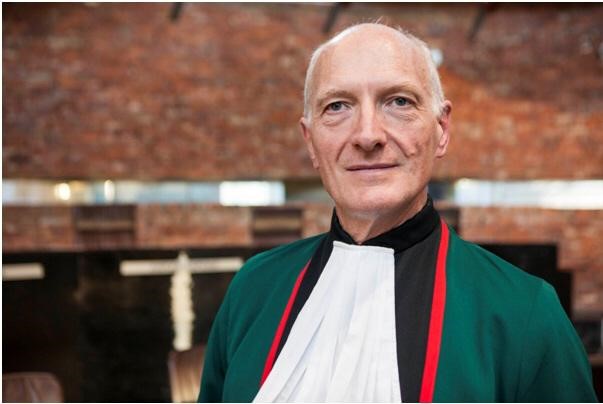
JUSTICE EDWIN CAMERON (MATRIC CLASS OF 1970)
I was born in Pretoria, but family fracture took me to many towns and to many schools across South Africa. My family was also indigent – before the age of seven, I found myself, with my sisters, in a children’s home in Queenstown, where I spent most of the next five years. Bereavement also followed, when my sister Jeanie’s and my elder sibling, Laura, died in a cycling collision.
After familial difficulty seeded with grief, Pretoria Boys’ High was my big, big, break. After seven previous schools, this, the eighth, in my second year of high school, came upon my life like a mystical oasis. The School proved to be an exciting well of refreshment, opportunity, learning, rigour and inspiration.
The imposing Herbert Baker-designed early-20th century buildings seemed overwhelming. The masters wore gowns! Latin was an option! The academic, boarding and sports facilities, though much more modest than now, were nevertheless to me a dream. And the schoolmasters – sophisticated, well-read, highly skilled, challenging, stimulating, creative, amusing.
PBHS proved to be the great turning point in my life. It opened the door to the Anglo-American Open Scholarship, which I received in 1972, after my year’s service in the South African Defence Force. Not only did the Scholarship pay all my fees at Stellenbosch University, but it came with a monthly stipend that seemed to confer untold riches.
From Stellenbosch, I was elected as a Rhodes Scholar to Oxford. None of this, I think, would have touched my life without my four years at PBHS.
That was the upside – a joyful, enriching and sustaining, life-altering upside.
There were also downsides. Like many boys-only schools, the adolescent discourse was sometimes brutal, often homophobic. The school’s emphasis, then, was on sporting prowess. “Colours” for chess, debating and academic attainment came years later, long after my cadre had left.
Some months after starting at PBHS, during a turbulent adolescence, it gradually dawned on me – to my aghast horror – that I was same-sex orientated: in the demeaning term then used, I was “queer” – a label now proudly re-appropriated by lesbian, gay, bisexual, transgender and intersex people.
The constant jibing, the vile jokes and the hateful terms endemic to most all-male environments were never directed specifically at me, but I lived in constant dread that they might be. This laid deep trenches of self-stigma and fear.
And there was a later realization: my path out of poverty and into PBHS was paved by apartheid privileges. The School was then all-white: if all my circumstances were identical, but I had not been white, the School would have been barred to me.
Fifty-one years later, its leadership is grappling thoughtfully to convert this legacy of racial exclusion into a fuller richness of diversity and inclusion.
Despite the racially exclusionary setting, our schoolmasters were, for the most part, almost entirely, liberal-minded. Hugo Ackermann, a particular mentor, who taught us both Latin and Mathematics, sternly admonished us against hateful, racist terms. The vehemently anti-apartheid Rand Daily Mail, later, at the apartheid government’s behest, shut down by the corporation that owned it, lay open every day for us to absorb, on a reading stand in a protected corridor.
In this way, PBHS laid a sediment that provided a foundation later for my (very belated) political activism.
In the 1980s, after returning from Oxford, I focused my legal practice on anti-apartheid work, for trade unions and ANC fighters charged with treason, conscientious and religious objectors, and against forced removals.
Having renounced the shame surrounding queerness, I actively advocated queer equality and worked to secure sexual orientation in the new Constitution – a world-first for South Africa. When we became a democracy, President Nelson Mandela appointed me a judge, and I was privileged to serve in the High Court, the Supreme Court of Appeal, and the highest court, the Constitutional Court. I stepped down from the Bench after 25 years’ service. I am now inspecting judge of prisons, and Chancellor of Stellenbosch University.
More than fifty years after I left, PBHS remains a pivot in my life – a pivot out of poverty and into intellectual excitement, challenge and opportunity. Some of my closest, most loyal bonds were formed there – among them, enduring friendships with classmates including John Salmon, Paul Novellie, Kevin Rosman, Derek Lamb and Laurence Nowosenetz. Prime amongst these friends was poignantly deceased Michael Leinberger.
I also formed treasured adult friendships with brilliant former schoolmasters, Vivian Henry and Tos du Toit and became a member of Hugo Ackermann’s family.
For me, the privileges the School lavished on me serve as continuing challenges. Perhaps the grossest failing of our democracy is the lamentable state of public education.
Though it is a government school, PBHS remains a shining exception. But its add-on fees are unattainably expensive for most Pretoria residents, especially in Mamelodi, Eersterust and Atteridgeville.
But the School shows what can be achieved, indeed, what should be achieved, with vision, determination, leadership and, of course, money.
Looking forward, I am proud to be involved in the School’s determined outreach and bursary program which is rightly racially targeted. Former Headmaster Bill Schroder is energetically leading this initiative.
Often I encounter old Boys who have marked the world deeply for the better. Business people, lawyers, politicians and religious leaders – all committed to building South Africa, and substituting incompetence, corruption, sloth, hatred, fear and ignorance with richer, better, things, with more beauty and with more opportunities, for everyone.
My education at PBHS, with its riches and privileges, the values it instilled, the sediment of learning and love for learning it instilled, still humble and enrich my life today, more than five decades later.
My greatest wish, as I look forward to entering my eighth decade, is to help make these lavish gifts available more widely and more equitably. That is an imperative for all of us.
CAMPAIGN LETTER
Dear Old Boy
The fundraising campaign, “Developing Tomorrow’s Leaders, Today” is nearing its ninth month and I am happy to inform you that it is progressing well and we have just over 6 million rand in money in the bank and signed pledges and 4.5 million has been transferred into an investment account with Investec. In addition, over 50 boys are currently being sponsored for varying periods and various amounts, largely by Old Boys, with a total value in excess of 5.5 million rand.
You will be aware of the huge disparity between the “haves” and the “have nots” in South Africa and this is exacerbated annually in education as the top schools produce excellent results while the other end of the spectrum (about 80% of state schools) achieve little more than mediocrity, if that. I had the privilege of piloting Boys High through the transformation period in the mid- nineties but realise now that I could and should have been more proactive in understanding and providing for future needs. Boys High is still a world class school in every respect and with the advent of a new Headmaster, Greg Hassenkamp, an Old Boy from 1990 who has bought into this initiative with zeal, commitment, understanding and courage, I believe this is the right time. For background and some more detail from the Headmaster, please click here.
Simply put, we would like to have 10% of the boys in the School (150) on bursaries which means that we would be giving them an educational opportunity denied to them through historical, geographical and financial reasons. While Boys High is still a state school, the assistance it receives from the state is less than 20% of what it actually costs to run the school. The boys would be handpicked for their academic ability in Maths, Science and Technology, would do courses in entrepreneurship and that, together with the holistic education and pastoral care for which Boys High is well-known and with continued mentorship throughout the five years, we should be able to produce outstanding young men who can make this country work. Currently it costs about R 400 000 to finance a boy for 5 years but this does vary should there be boarding needs, assistance with transport, uniforms etc. The boys selected for this programme will need to be closely mentored particularly in the early years which will inevitably require additional staff.
The Pretorian Trust is a fundraising body established in 1975 and will be the depository for donations, fundraising and the like and . there is a tax benefit attached to a donation to the Trust. Donations range from cash bequests and include the sale of an apartment and a valuable collection of art work ,pledges for donations over a number of years and debit orders pledged for 10 years. If you are unable to donate for whatever reason, please let me know so that I do not pester you further.
The major problem of the big scheme is sustainability. We would need to have a significant sum of money, wisely invested so that this scheme could run in perpetuity. Donors who wish to leave money in memory of family and friends are still welcome to do so. Some potential donors have shown an interest in sponsoring a boy or boys for five years and possibly longer. It is our hope that this could become a pilot project for other schools to follow, thus making a significant difference.
May I ask you to give this campaign your serious consideration? Should you have friends, colleagues or companies with which you are associated, please do copy this to them. Alternatively, I would be happy to engage with them directly as I would like to spread this beyond the Boys High family. I would be pleased to discuss this further telephonically or over coffee/drink/lunch.
I look forward to hearing from you.
Best regards
Bill
